Atmospherics: The Finish Protocol
Utilizing the uncompromising performance of Grade-A native heartwood, the specified finish serves as a definitive operational layer—calibrated to the exact environmental volume of the estate.
A finish is a clinical stage of active engineering. From multi-stage abrasive calibration to the precision application of organic spectrums, each treatment secures the material honesty and architectural intent of the heartwood.
Whether mandating a high-frequency saturated integration or the mineral depth of an alabaster typology—or a composite calibration like Alabaster Saturated—each finish is engineered for a specific spatial mandate.
Native Raw remains the foundational standard for its unrestricted structural versatility and long-term material stewardship.
The Material Violation: The Eradication of Heartwood
The application of synthetic pigments to Grade-A heartwood is a structural failure.
Heartwood is a living conduit—it regulates its internal lipids and silica in rhythm with the environment. Sealing this biological volume under paint chokes the structural integrity, leading to accelerated material decay.
Its golden-brown density is not meant for confinement. Masking the grain erases the geological truth of the origin.
Instead, specify curated atmospheric finishes that maintain material honesty—preserving the strength and generational weight of the sanctuary.
Institutional Note: This protocol refers strictly to heartwood; sapwood typologies lack the natural density required for exposed finishes and are excluded from our primary dossiers.
Structural Deviations: Organic Form Integration (e.g., Roots)
→
Absolute Form Preservation: Calibrations for organic root typologies utilize minimal surface preparation to ensure consistent absorption while maintaining the raw architectural form.
→
Tactile Honesty: Precision finishing maintains the grain patterns and knots of the organic structure, ensuring the sculptural weight remains the primary spatial focus.
→
Structural Finality: The result is a refined integration that complements the architectural volume without compromising the origin of the material.
Institutional Protocol: These directives apply specifically to products crafted from roots or branches, where traditional Grade-A heartwood classification shifts to an assessment of tree maturity and geological density.
Operational Intelligence
Material verification is a foundational requirement. Identifying the exact heartwood grade preserves capital and ensures generational permanence.
Retail misrepresentation of 'teak' without specifying its biological grade (A, B, or C) disrupts the execution of a sanctuary. Whether mislabeling sapwood or citing regional proxies (e.g., 'Philippine' or 'Brazilian' teak), these labels signal a lack of material honesty. Teak'al maintains a strict origin protocol, overseen by the Principal Curator.
Specifying Grade-A Heartwood is a commitment to the most resilient elemental material on earth.
→
Grade A: The innermost 35% of the tree—the high-density heartwood, saturated with native oils for absolute durability.
→
Grade B: The outer heartwood or immature timber. Reduced silica content and compromised structural integrity.
→
Grade C: Sapwood—porous, prone to decay, and architecturally non-viable.
The Standard of Excellence
→
Uncompromising Durability: High silica and lipid content mitigate thermal variance, warping, and saturation damage.
→
Elemental Shielding: Native tannins provide biological protection against mold, UV degradation, and pest intrusion.
→
Chemical-Free Regulation: The material self-regulates moisture, ensuring an eco-friendly integration into any environment.
Teak'al utilizes 100% premium Javanese Grade-A heartwood—never reclaimed, never compromised.
Specification of Material Atmosphere
Each treatment is curated to enhance the performance and material truth of the heartwood. These parameters are engineered for generational time. Review the structural dossier below for performance metrics and finish classifications.
Operational Performance Criteria
Institutional Finish Ledger
Operational Preservation & Stewardship
Finish Selection: The Labor Tiers
Foundational Protocol (Baseline)
The Teak’al signature finish (Native Raw). Achieved through multi-stage abrasive-milled micro-sanding to achieve tactile honesty and a silky, zero-friction interface. Native Raw preserves the wood's organic respiratory function.
Institutional Setup Floor: Included
Refined Protocol (15%)
Atmospheric resonance achieved through triple-pass hand-rubbed saturation. This protocol accounts for a 72-hour stabilized curing period, ensuring total molecular integration and baseline lipid preservation.
Institutional Setup Floor: $150.00
Exclusive Protocol (25%)
Engineered for absolute spatial finality. Utilizing a six-pass integration sequence with climate-controlled maturation for 144 hours. Designed for extreme environments where temporal density is required.
Institutional Setup Floor: $250.00
Institutional Protocol: Organic Form Typologies
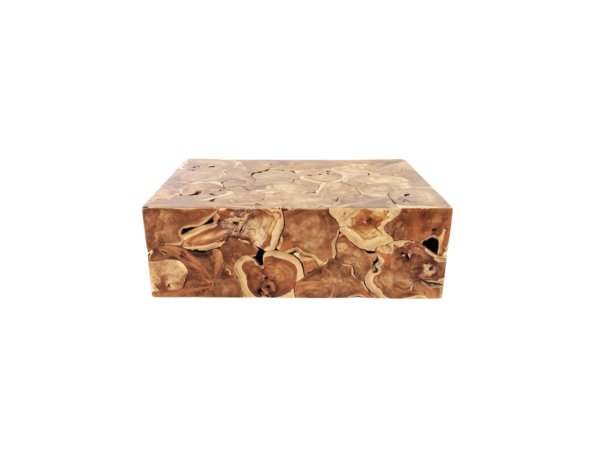
For artifacts utilizing roots, trunks, or branches, the sanding sequence follows a Hybrid Calibration. While primary contact surfaces are hand-sanded to absolute tactile smoothness, specific structural recesses and organic voids are intentionally preserved in their native state.
Principal Oversight
A foundational anchor is not an object; it is an heirloom. For technical inquiries or stewardship protocols, the Principal Curator provides direct oversight.
Atmospheric | Tactile | Elemental | Resonance